
24/7 answering
Hours, message capture, callback or an emergency route you define.
Greet, identify intent, answer what you approve, then transfer when a person is needed.
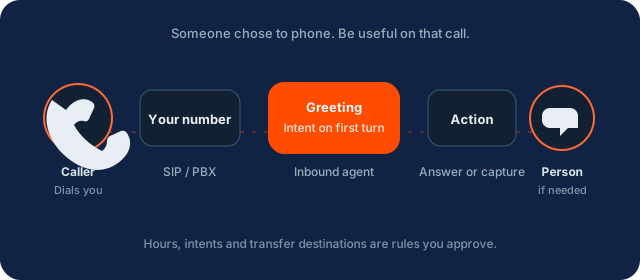
The inbound job
Greet, understand why they called, do the next allowed step, and involve a person when the request leaves the script.
Use cases
Hours, message capture, callback or an emergency route you define.
Hours, location, fees and policy — from content you approve.
Ask the questions your team already asks, then pass structured notes.
When the call is scheduling, confirm through your calendar.
Queue, extension or voicemail from intent, language and hours.
Transfer when the caller asks, confidence is low, or identity fails.
Name, callback, reference and reason — into CRM, ticket or inbox.
We map your numbers and SIP or PBX into the agent, then set hours, intents, knowledge sources and transfer destinations. Compatibility with a given telephony provider is verified before build.
Bring the number, the hours, the questions your staff already ask, and where a person should take over.
FAQ
Yes. Inbound agents can greet callers, collect intent, answer approved questions, book appointments and route to a person.
Yes, within the workflows you define: message capture, callback logging, emergency routing or limited self-service.
No. The usual model is first-level automation plus escalation. Human staff remain responsible for complex, sensitive or exception cases.
Routing follows rules you approve: hours, intent, language, queue, extension or voicemail. The agent does not invent a destination outside that map.